

The Biggest Problem in Corporations - Data Proliferation, 3 tips to tackle this issue

on Friday, 14 June 2013. Posted in Solution & Business Architecture

The Biggest Problem in Corporations - Data Proliferation, 3 tips to tackle this issue
 
 
Data is impacted by numerous processes, most of which affect its quality to a certain degree. As data proliferation in the enterprise continues its exponential expansion and the size, complexity, and heterogeneous nature of IT systems environments scales to keep up, data quality and trust become increasingly important. Trusted data initiatives will remain strategic.

The business drivers that are pushing (Master Data Management) MDM:

•   Runaway costs that include bad data

•   Missed opportunities mostly from lack of transparency from the business pipeline

•   With the potential jail time to corporate officer’s regulatory compliance, security and sensitive data will continue the push towards a standardized view of critical data.

•   Integrating new businesses as M&A continues, consolidating corporate data from multiple acquisitions.

2014-16 will be great years for MDM, I think standards and the trustworthy view of critical data will be propagated and included in the processes of most businesses. I think we will soon reach a meeting point between MDM and Big Data, as we know big data comes in many forms: some is structured, some unstructured; some is generated internally, some externally. The current MDM solutions are know being built with internal and some external integration points.

When selecting an MDM technology I would recommend use the Gartner or Forrester reports, and in my opinion I would only spend time looking the top right quadrant.

Some companies are naïve when it comes to choosing MDM technologies, wrongly assuming that the market is mature and that everything works fine these days. In my view, this is wrong it will take another 3-5 years for this area to mature.

Below is the year over year Gartner Magic quadrant on MDM

MDM 2012-2013 Gartner Comparison

Three tips

  1. Shortlist your suppliers and make sure they have a track record with your type of data
  2. MDM projects are always tricky, follow a think big start small approach. The approach should consider all data domains, but take a gradual, step-wise approach to implementation, delivering incremental business value
  3. In 2014,I think companies will be moving toward an Enterprise App Store similar to Google and Apple store and this will oblige companies to accelerate their efforts on MDM.(look into creating an enterprise app store)

One of the big accomplishments of these technologies, analysis of data has become a key differentiator within many industries.

Like usual please share your thoughts on MDM, Big data and the Enterprise App Stores trends

Practical Cutover Tips for Your Enterprise Project

on Monday, 03 June 2013. Posted in Enterprise Software , Blog

Practical Cutover Tips for Your Enterprise  Project


The cutover and go-live of an enterprise system must be well thought out;

An awareness campaign to the users should be launched 6 weeks in advance to prepare them for Go Live.

It includes awareness messages, the tasks to be carried out during system unavailability and other related information.

The implementation of Enterprise Software is almost always a massive operation that brings a lot of changes in the organization. Virtually every person in the organization is involved, whether they are part of the Functional or technical or the actual end users of the enterprise software.

Below I share tips and tricks on the critical last 6 weeks before going live in the areas of testing, data conversion, training and cutover validation.

Enterprise Cutover

Like always share your thoughts and feedback

More tips for production cutover to new system

http://appsconsultant.com/item/tips-for-enterprise-production-cutover-projects

BPM and SOA are joined at the hip - 5 tips - next mobile bpm is coming.

on Tuesday, 14 May 2013. Posted in Blog, BPM

BPM and SOA are joined at the hip - 5 tips - next mobile bpm is coming.


Over time, business process logic became embedded in these custom applications, often undocumented code and proprietary data structures that were expensive to change, the business answer was to duplicate business functionality, which of course increased the difficulty and expense of changing code. That resulted in higher IT costs and growing IT backlogs.

In my view most companies are starting the adoption of a data/process governance model across the enterprise and have understood the important link between BPM and SOA.


BPM is a management discipline that documents business processes so that they may be consistently executed, by measuring, monitoring and controlling process performance this includes key inputs and outputs of process.

BPM is a way of building operational solutions. SOA is a thought model that helps decompose complex problems into well-defined and reusable components. BPM ends with a statement of the desired level of automationand SOA begins with the set of services that are available to support the desired automation.


Tip 1 – Provide your business analysts /architects with BPMN 2.0 and BPEL modeling for your enterprise projects

Tip 2 – Embrace your company methodology don’t drop it because of BPM or SOA modify the governance process and add the new deliverables into your existing company methodology.

Tip 3 – BPM and SOA follow what you design is what you execute” (WYDIWYE) model. This model eliminates synchronization problems between design and run time, traditionally when the analyst created his business requirements document and the Developer developed the RICE(Report, Interface, Conversion Extension) Communication/interpretation issues occured. With BPMN Technical and Business Analysts are using the same tools.

Tip 4 - Connect your Business Analyst to BPM to create a realistic road map for process transformation. Anytime I'm in a room filled with enterprise architects and business process professionals, there's often a healthy debate back and forth about who drives transformation across the enterprise. The truth of the matter is that architects are usually the ones tasked with designing and delivering business transformation. And architects are often found in both EA and Business teams.  If your Business Process initiative doesn't have an architect, make it a top priority to bone up on architecture in and look to add architecture skills to your process transformation activities.

Tip 5Here are guidelines for which business problems are best suited for SOA adoption


Business Characteristics Unlikely SOA Case Likely SOA Case
Process Rate Change

Low

High

Shared Services

No

Yes

Business Transactional Model

Transactional

Procedural

Organizational Scope

Vertical

Horizontal

Runtime Dynamics

Static

Dynamic

Business Data

Centralized

Distributed


BPM next focus should go towards mobile.
But looking a few years ahead, there is a one technology that I believe will have an impact on the way BPM systems are built: Speech Recognition.


The business case is quite simple:
Most of the BPM solutions use forms.
Once forms were filled by pencil and paper, then came the electronic forms, then keyboards to fill in the forms, and now “Mobile” enables you to “tap” information into the forms.

Your thoughts what do you think... 


Below are some previous blogs on the topic of SOA and BPM:

Use BPM and SOA to drive out cost

http://appsconsultant.com/index.php?option=com_content&task=view&id=170&Itemid=9

Business Process Execution Language

http://appsconsultant.com/index.php?option=com_content&task=view&id=44&Itemid=9


SOA Architecture Strategy

http://appsconsultant.com/index.php?option=com_content&task=view&id=118&Itemid=9


Service Oriented Architecture (SOA)

http://appsconsultant.com/index.php?option=com_content&task=view&id=53&Itemid=9


Test drove Oracle Fusion Solution for Mobile Devices with Fusion CRM, my synopsis with 6 pros and 1 con

on Thursday, 25 April 2013. Posted in Enterprise Software , Featured

Test drove Oracle Fusion Solution for Mobile Devices with Fusion CRM, my synopsis with 6 pros and 1 con


With Oracle Fusion CRM you are able to access the data in real time from your mobile device. I used my Blackberry device.

Here is the screenshot from the device once you log in.


Pros

 1-Response time was excellent i was in Montreal and Fusion servers in San Francisco, the response time was superb (1-3 seconds)

2- Setting up events on the go with the fusion calendar was responsive and easy to perform.

3- In opportunities you are able to drill down into related contacts and notes and you can easily shoot off an email, process is intuitive nicely done.

4- Natively the mobile applications integrates with your phones email, maps and calendar. No special setups required just allow the application to access your phone settings.

5- Fusion CRM data now validates your data  at point-of-entry ,validation occurs on name duplications, address and company information

6- My favorite feature was the Oracle Voice aka as Fusion Tap, (similar to Siri) and translates your voice into text and uses a worklflow to aggregate your information, finds the opportunity and records your information. Voice recognition was great did not get any glitches during testing.

 oracle voice


Here is a screenshot of the Oracle Fusion CRM application we used Vision data

Oracle fusion CRM

Fusion CRM strengths

1) Easy to navigate

2) My view the best new functionality are the predictive analytics it know identifies you more easily and helps you in finding the information to cross-sell and up-sell opportunities by accessing your entire sales team data

Con

Overall the only disadvantage for the Fusion Applications its more of a general comment the adoption of Fusion applications has been slower than Oracle expected. it may take time before corporations adopt and deploy these functionalities, some of these functionalities I believe may cause a large cultural change for some organizations.


Overall I think this is a great starting point in making your salesforce become a more mobile workforce. 

As Cloud Computing continues its good adoption rate, I think the prospects of Fusion mobile CRM will be very promising.


Lessons Learned the hard way from a failed project – Do we learn from our mistakes

on Thursday, 18 April 2013. Posted in SOA


People learn best from failure. It drives lessons home like nothing else. Here is an email from a reader:

From: *********** [mailto:***********]
Sent: April 16, 2013 6:33 PM
To: This email address is being protected from spambots. You need JavaScript enabled to view it.
Subject: Building a Centralized Architecture


Dear Alex,

Pursuant to our telephone conversation today, I did some internal research and we are mostly an Oracle ERP,EPM, (back office applications) with Microsoft and Linux OS, and SalesForce as our CRM. Our companies strategy changed to a more centralized vision, mostly because some big IT projects being executed by us the business went really bad.

The following products ***** finance, procurement, hrms functionalities were not functioning for days.*********

Top management reacted and shutdown these initiatives.The cost was many millions but an excellent lesson learned, for all of us.

Top 4 points: 1- We hired the wrong consultants friendships with management existed that flawed results 2- Groupthink no one dared to challenge status quo, all of us did not foster diverse thinking 3- Project management provided too much of a rosy picture on status reports. 4- Fingerpointing existed and we lacked project members having the walk the talk attitude.

We had to rollback to our previous systems, and then the project was stopped.

My question, we are looking to purchase an architecture methodology mostly to help the organizations grow from our slip-ups we are starting with our SOA approach, governance and SOA operations.

We are looking at Zachman, Gartners, Oracle or TOGAF. Can you provide us your viewpoint on which methodology would you use knowing abit our environment and company.

Regards,

*********************************

*********************************

***Received approval to share this article from the reader.


 The lessons learned for all of us, in my view are as follows:

 1-      Sometimes you think you are so good and so far ahead of the curve that you fall right off the edge

2-      When a project is obviously doomed to failure, get out sooner rather than later.

3-      A square peg in a round hole won't fit any better as time goes on. Problems that go unaddressed will only get worse, not better, over time.


Here is my top 10 advice in an enterprise project environments with high stakes involved:

  1. Hire to elevate knowledge
  2. Stick to the facts always decide with data
  3. Respect your team and make it fun
  4. Listen, learn and execute
  5. Try simplicity every time - while it may sound easy, it's the hardest thing to practice and will force you to get creative every time
  6. Avoid buzzwords
  7. Forego your ego
  8. Walk the talk
  9. Enthusiasm is always infectious
  10. Never give up, nothing is impossible

My view on the SOA Architecture Methodology question

Often the most difficult and important task that any corporation must perform is to select and implement an all-encompassing architecture methodology.

My view all 4 architecture methodologies mentioned above (Zachman, TOGAF, Gartner and Oracle) offer a sound basis to build your company architecture methodology. The only tip ‘never take it as is always customize it to your corporations culture’.

In this case the corporation is in 10 countries and has revenues of about 130 million dollars. In my view they should go with Oracle’s Methodology since they’re back office applications are 90% Oracle based and it was given to them for free. By the way the Oracle architecture methodology in my view is inspired by the TOGAF Methodology.

When it comes to OUM (Oracles Unified Method) The SOA core workflow view answers their requirements .The SOA Workflow View is used to help organizations to execute projects within a SOA environment .

Here is an overall diagram: reference OUM Methodology – SOA Core Workflow View

 SOA Core Workflow VIEW - OUM

Overall, my view is that starting an enterprise project is not like everything else. Nothing important is all that easy. Work hard, Learn from mistakes, Be Optimistic, Try again and Face your fears.

As per SOA methodology, reflect on your corporation’s culture and take into consideration the internal decision making process and vision as per vendor neutrality.

Like always share your thoughts and experiences

Architecture for the cloud; Tips to build and deploy your cloud based applications

on Friday, 12 April 2013. Posted in Enterprise Software , Solution & Business Architecture, Enterprise Architecture

Architecture for the cloud; Tips to build and deploy your cloud based applications

The cloud and cloud-based solutions are here to stay. This will continue to drive business solutions for a long time. Why? Clear and measurable benefits below i believe are the top 4 reasons :

1- Almost zero upfront infrastructure investment

2- Just-in-time Infrastructure

3- More efficient resource utilization

4- The possibility of usage-based costing on your back office applications

Cloud is a disruptive force. However, the cloud’s “Achilles heel” is a lack of integration with the rest of the enterprise. Realizing its full potential relies, for the foreseeable future, on integrating data in the cloud with on-premise applications and databases.

Today’s enterprise cloud initiatives require decoupled data systems working together , without the need for personnel and other resources to set up and maintain them , making integration key to a successful deployment.

Most companies cannot and will not abandon their previous IT investments to make the leap to the cloud all at once. Instead, there is more likely to be a gradual shift in business processes to the cloud over time, similar by nature to a perpetual proof of concept.

As the cloud delivers on its promise, more processes will be shifted to this computing model. Complexity and diminished ROI will be the consequence when long-term strategy and goals are not implemented in advance. Put simply: integration needs to be a forefront, not on the afterthought of your project strategy.

Always design for failure, be a pessimist when designing architectures in the cloud; assume things will fail. In other words, always design, implement and deploy for automated recovery from failure.

In particular, assume that your hardware will fail. Assume that outages will occur. Assume that some disaster will strike your application. Assume that you will be slammed with more than the expected number of requests per second some day. Assume that with time your application software will fail too. By being a pessimist, you end up thinking about recovery strategies during design time, which helps in designing an overall system better.

If you realize that things fail over time and incorporate that thinking into your architecture, build mechanisms to handle that failure before disaster strikes to deal with a scalable infrastructure, you will end up creating a fault-tolerant architecture that is optimized for the cloud.

Questions that you need to ask: What happens if a node in your system fails? How do you recognize that failure? How do I replace that node? What kind of scenarios do I have to plan for? What are my single points of failure? If a load balancer is sitting in front of an array of application servers, what if that load balancer fails? If there are master and slaves in your architecture, what if the master node fails? How does the failover occur and how is a new slave instantiated and brought into sync with the master?

Just like designing for hardware failure, you have to also design for software failure.

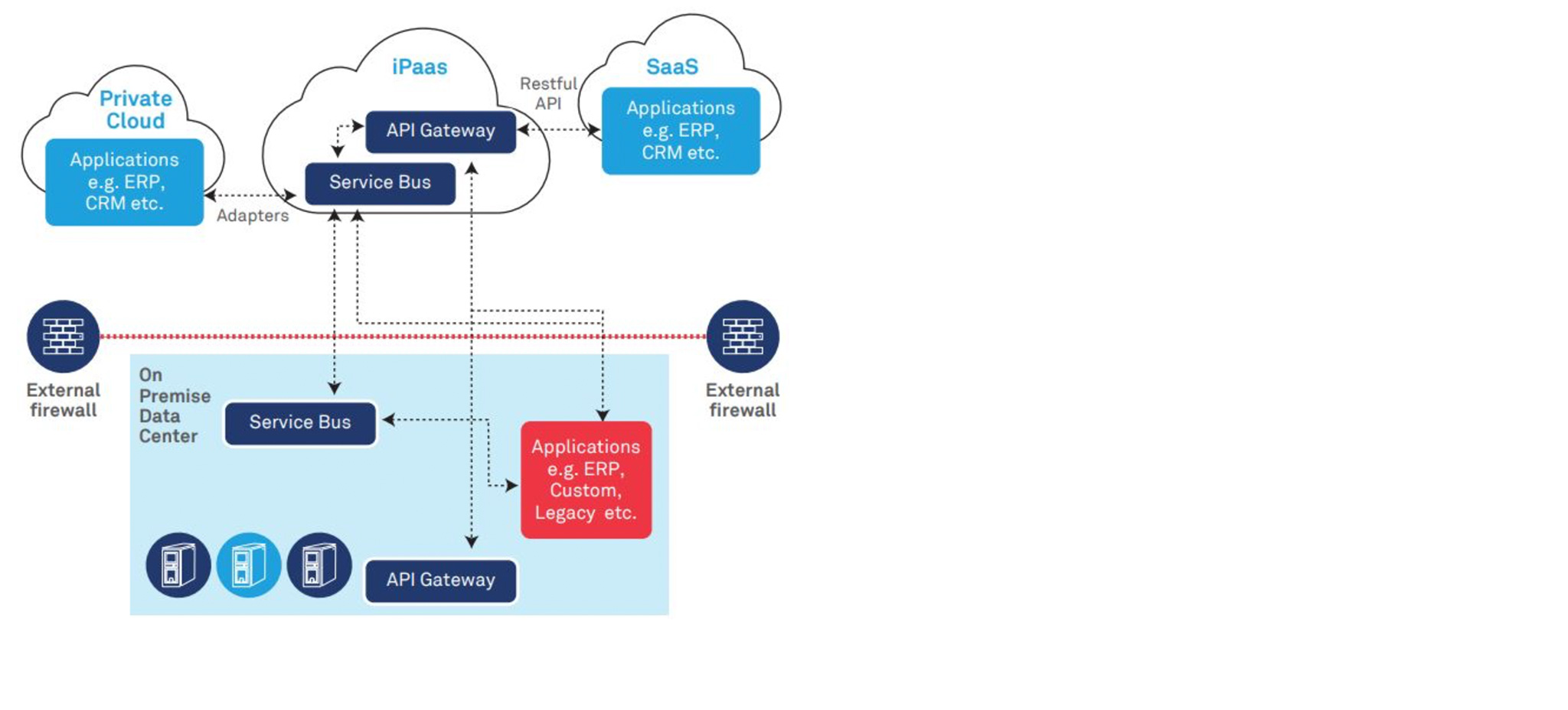
Below is a baseline to help you consider all the moving parts required to build and deploy your cloud based applications.

 appsconsultantcloudapps

Lastly build process threads that resume on reboot and good cloud architecture should not be impacted to reboots and re-launches.

Like it or not, the cloud is a disruptive force, that i think will require us to move towards a more data centric business model.

Like usual, please share your thoughts and experiences

Extract from the Oracle March 2013 Newsletter - Various Global Experts share their Knowledge

on Sunday, 07 April 2013. Posted in General - Misc. Tips, Blog

Extract from the Oracle March 2013 Newsletter - Various Global Experts share their Knowledge


Here is an excerpt of the Oracle March 2013 Newsletter, different global experts share their enthusiasm on Oracle functional, technical ideas and concepts:

- UKOUG Magazine Oracle Scene: Database Virtualization and Instant Cloning (p26) written by Oracle ACE Kyle Hailey

- Professional Software Development using Oracle Application Express written by Oracle ACE Rob van Wijk

- Dutch IT magazine: A seven part series on the OTN Yathra Tour 2013 and IT in India written by ACE Director Lucas Jellema (in Dutch)

NEW VIDEOS

MySQL Stored Routines Debugger & Debugging API: Sneak Peek II created by Oracle ACE Shlomi Noach

Blog Post: How to Implement Fusion Applications

Oracle ACE Alex Antonatos shares his knowledge on Oracle Fusion by answering questions and providing a visual diagram on the steps required to implement an instance of fusion applications.

He also provides a whiteboard animation video discussing Fusion Financial and HCM Apps benefits.

Blog Post: ADF, Oracle SQL and more posts by ACE Director Lucas Jellema

- ADF: (re-)Introducing Contextual Events in several simple steps

- Oracle SQL – Finding free adjacent seats in an airplane, using Subquery Factoring, Analytical Functions (LISTAGG and LEAD), Outer Join, PIVOT and good old INSTR

- Out of the box usage of ADF DVT Scheduling Gantt Chart to report Database Query Results using stacked bar charts per time period

- Oracle SQL – spotting combinations that occur and those that do not – demonstrating Analytical Functions, Outer Join and SubQuery Factoring

- Oracle SQL: Using subquery factoring in an INSERT statement

- How Oracle Database uses internal locks to make statement level constraint validation robust at the transaction level

Blog Post: When 'FREE' costs more in the long run: Why WebCenter often costs less then SharePoint - despite the stunning license price difference

Are you clear on the Great and the Ugly of WebCenter and SharePoint - enough to recommend one over the other for an enterprise-wide deployment? Feeling that your company has made a mistake by picking the wrong product? Or simply wondering "what if... ?" Check out this 2 page mini-whitepaper written by Oracle ACE Dmitri Khanine for some answers. It’s a quick read, that may shock and excite you.

Blog Post : Exadata Optimization Tips

Where do I start with Oracle if I want to be a DBA? written by Oracle ACE Kyle Hailey

Blog Post: Amazon EC2 - RDS quick comparison

Oracle ACE Marco Tusa provides a review of the real status about Amazon RDS in comparison with EC2.

Blog Post: Possible Data Corruption, ORA-600 on RAC Instances Shutdown

ACE Director Syed Jaffar Hussain discusses how a typical RAC instance shutdown sometimes can lead to data corruption and produces senescence of ORA-600 and what is the recommended RAC instance/database shutdown procedure to avoid the issue.

If you are planning a Database 11g upgrade with downgrade in mind, you will might find these tips provided by Syed helpful.

Blog Post: 5-Part Series on Oracle Clustering

ACE Director Brendan Tierney has published a series of 5 blog posts on how to do Clustering using the Oracle Data Miner Tool and how to do Clustering using the ODM SQL and PL/SQL functions. Part 1, 2, 3, 4, 5

Another post by Brendan will help determine whether you are a Type I or a Type II Data Scientist. Find out here.

Blog Post: Using Production Data for Testing

Daily DBA tasks, dealing with development environment and refresing using production data... is this a good idea? Production Data contains sensitive information and should not be shared with unauthorized people. Read this post, including data research on security, provided by Oracle ACE Osama Mustafa.

Blog Post: CBO 10053 Trace Files Series

A series of posts provided by ACE Director Doug Burns on what he thinks is the most important reason to use 10053 trace files.

Blog Post: Bash Script to Upload RMAN Backups via FTP

Oracle ACE Gokhan Atil shares a small bash script which calls an SQL script to queries RMAN backups and demonstrates some interesting methods such as handling arrays returned from SQLPLus.

Blog Post: Convert JSON to XML/SOAP (in Spanish)

A common occurance these days, Oracle ACE Rolando Carrasco provides a guide to converting JSON to XML/SOAP using Oracle Service Bus.

In a different post, he shares an introduction to Oracle ADF Mobile.

Blog Post: Debugging Data Pump session

While importing a dump file, it can sometimes be a long process. ACE Director, Kamran Agayev, shares his command solution he runs to import the dump file into the new database.

Blog Post: What is the Oracle Cloud Really?

If you ever wondered what is the big deal around Oracle Cloud Service, you'll want to read this post written by ACE Director Markus Eisele. He explains it well and also provides an example on how to use JAX-RS with Jersey on the Oracle Cloud Service

Another interesting post Markus shares is about Test driving Java API for Processing JSON with GlassFish 4.0.

Blog Post: Installing Oracle Business Transaction Monitoring 12.1.0.3

Oracle ACE Rob Zoeteweij created virtual Servers and describes the installation process of BTS in his latest post.

Rob continues to share his knowledge on EM 12c, this post describes how to setup Database as a Service using EM12c DB Plugin 12.1.0.3.

Blog Post: Pseudo Cursors and Invisible SQL

Do you ever wonder why Oracle Enterprise Manager and AWR reports show the SQL text for some SQL IDs as not available? ACE Director Julian Dontcheff provides an explanation in his latest post.

Here's another good read by Julian on the definition of "The Oracle Platform Administrator".

Blog Post: Cost Free Joins

In this two-part post, ACE Director Randolf Geist first demonstrates an unexpected Nested Loop Join caused by an extreme data distribution. In the latter, he presents another case of an unexpected execution plan, this time about Merge Joins.

Blog Post: Oracle Background Process Killed

Oracle ACE Asif Momen demonstrates how to connect to the Oracle Database even if background processes are k.illed

Blog Post: Adding HINTS in ODI

Read this post written by Gurcan Orhan as he explains how to implement adding Oracle HINTS and Variable HINTS into ODI (static and dynamic).


Get rid of the lengthy COTS Feasibility Study, Interesting facts & data to make you think twice

on Tuesday, 19 March 2013. Posted in Blog, Enterprise Architecture

Get rid of the lengthy COTS Feasibility Study, Interesting facts & data to make you think twice


                                                       Feasibility studies permit planners to outline their ideas on paper before implementing them. This can reveal errors in project design before their implementation negatively affects the project. Applying the lessons gained from a feasibility study can significantly lower the project risks. In my view feasibility studies should never be longer than 4 months, no matter how big your project is let me explain:

The Feasibility study is not a sales pitch, way too often we focus on the COTS (Commercial off the shelf ) product, In my view, this is a fundamental mistake all these products work and are already integrated (PeopleSoft, Oracle EBS, Fusion,JDE, SAP, Siebel) it does not make sense any longer with the vast information out they’re to be completing Feasibility studies with full system analysis like Oracle or SAP that last longer than 4 months.

Why? I have yet to hear in my career that Oracle or SAP cannot perform a certain business function if not vanilla or with a RICE(Report-Interface-Conversion-Extension). Especially know that everyone has adopted a SOA more Open based Architecture.

Below is an email I received by an individual that gave me approval to print this email onto this article, he shares his experience about their feasibility study:

From: **************************************
Sent: March 4, 2013 7:41 PM
To: Alex Antonatos [mailto: This email address is being protected from spambots. You need JavaScript enabled to view it. ]
Subject: RE: Oracle Fusion vs PSFT


Hi Alex,

Great read on your Fusion article, just to let you know we just performed a 10 Month feasibility study on PeopleSoft or Fusion and we came up with the similar conclusions as per your article.

The only thing that bothers me, we could of donated that money to a worthy cause. I think we spent almost a million dollars if you tally up the employees like myself hourly rate and some consultants that were with us.

I have been in the IT field for 25 years, and the end game is always the same ;consultant come in make the money and leave after 3-6 months to the next project and the employees get the s**t for why we spent so much money, and the employees are stuck to show the value add of the 10 month feasibility project.

On a side note, I really enjoy your blog and thank you for the whitepapers.


Best Regards,

***************************

***************************

***************************

***************************

***************************

***************************

***************************


In the case above, we all sense some passion&frustration, I dont blame him they spent over 1 million dollars to go ahead to say that PeopleSoft 9 or Fusion can integrate to the current landscape of systems. Same answer as day 1. They’re study presented risks and returns associated with the project so the prospective managers can evaluate them. Again in their case they also believed their Finance and HRMS systems where so different compared to the norm and fell into a sales pitch of functionalities.

Here are some more examples of long feasibility studies that went the wrong direction:

1) ERP implementation , business functions inability of Hershey to ship candys for Halloween (The Feasibility study was 10 months)

2) ERP Implementation Nike Losing major shoe orders (The Feasibility study was 9 months)

3) Foxmeyers failure to process financial information and orders (The Feasibility study was 11 months)

4) BSkyB (BSY) got a 318 Million pound settlement in 2010 for a COTS system that did not work (The Feasibility study was 13 months)

5) UK Government scraps a 12 Billion National Program to provide integrated electronic records (15 Month Feasibility)

6) State of California spent 300 Million dollars in implementing a COTS software (12 Month feasibility study)

Here are some practical tips and guidelines:

  1. Use social media, an example when i wrote the article about Fusion and asked people to share their go live experiences i received 87 emails in 72 hours. These answers helped me understand quickly the different strengths and weaknesses of the product.
  2. In my view, The acceptable level for any business feasibility of a COTS package should not be more than 4 months, but the appropriate risk rate will vary for each individual depending on their personal work situation. Less experience teams usually require more time to complete a COTS Feasibility study.
  3. No SALES Pitch, focus on the integration, economic viability and operational zing of the project
  4. Don’t expect perfection in a feasibility study this is the main reason it should be short and done quickly.
  5. Bottom lines there are dozens of reasons why a feasibility study can't be done in a shorter timeframe, but perhaps only one why it can. It’s up to you to decide whether you are going to search for a way to do it, or regularly settle for a handy excuse. Some companies fall into the trap and use the feasibility study more like a sales pitch. Don’t do it!.

I am a big fan of the feasibility study but it should be a quick study and low cost exercise to determine if your COTS project (Commercial Off the Shelf Product) makes sense to adopt it within your organization.

I would love to hear about your experiences and thoughts with your ERP, CRM, SAAS Feasibility studies.


Oracle Fusion Applications Workflow for Project Implementation & answers to questions received by e-mail on Fusion

on Tuesday, 26 February 2013. Posted in Enterprise Software , Featured, fusion

Oracle Fusion Applications Workflow for Project Implementation & answers to questions received by e-mail on Fusion


We are now at release 6 of Oracle fusion applications (11.1.6), many questions have been raised on the implementation approach. Fusion don't forget is a combination of multiple Enterprise systems that Oracle acquired and yes Oracle took some of each to create Fusion.

Below is a visual diagram I created on the steps required to implement an instance of fusion applications:

 Oracle fusion apps implementaiton workflow


In general , it took me about 3 days to configure HCM and Financials, the functional configuration enables your Offerings and Functional Areas for implementation, and you select the Feature Choices, which typically enable you to integrate Offerings. Below is a screenshot


fusion apps setup

Question – What are some of the differences between EBS and Fusion Applications?

This questions comes often and people still believe no major changes exist,    below are 4 of them in the areas of Authentication, Authorization, Security and Segregation of duties.


E-Business

Fusion Application

Authentication

FND_USER

FMW(Fusion MiddleWare) OAM/LDAP

Authorization

AOL security model

FMW OPSS Oracle Platform Security Services

Security platform

Proprietary

FMW OPSS

Segregation Of Duties (SOD)

No functionality

Predefined SOD policies
Application Access Controls
Governor (AACG)

Question – In Fusion Applications Vision data does not exist anymore?

This is a common myth; here is a screenshot with some vision data

 fusion vision

Question 3 – Oracle Fusion Applications Documentation not available online?

Below is the link to Oracle Fusion Applications release 11.1.6

 fusion apps doc 11.1.6

http://docs.oracle.com/cd/E37583_01/index.htm

Oracle Fusion documentation is improving rapidly, it know include lots of detail with examples to help us take the right decisions.


Google Glass - Augmented Reality Headgear 4 pros and 2 cons

on Sunday, 24 February 2013. Posted in General - Misc. Tips

Google Glass - Augmented Reality Headgear 4 pros and 2 cons


This weekend I had the pleasure to test Google Glass, I think that Google's augmented reality headgear is equipped to transform everyday life. This prototype isn't the final version of Google Glass, I was told expect a public available version by the end of year at a cost between 1200-1500$.

If you want to get a beta version of the glasses here is the link: http://www.google.com/glass/start/how-to-get-one/

Pros

  1. The glasses will free you from having to constantly pull out your phone for calls, emails or texts.
  2. Navigation by foot through the city is fantastic with Google Glass quite precise
  3. The recording of video quality is superb. The take a picture command worked well.
  4. Google Glass is heavily dependent on voice commands, worked quite well just received one misunderstanding error but I think it was me mumbling, very responsive.

 Cons

  1. I think we may have privacy issues. Google glasses is able to record everything one sees and does.
  2. My perception Google glass the frame seems fragile and maybe easy to break.

In conclusion Google Glass hopes to be one of the newest and most innovative technologies in recent times. The world of wearable computers and augmented reality has barely been introduced, and Glass intends to be a pioneer into this field in the same way that the iPad was in the tablet industry.

Even though Google Glass is still in the development process, there are already numerous of capabilities and applications that could be very useful for consumers, such as live video and data streaming. Users will be able to utilize email, video chat such as Skype, and social networking services such as Twitter and Facebook. Looking forward to the final product!


Solid articles from the best minds within the Oracle Space

on Tuesday, 05 February 2013. Posted in Enterprise Software , Featured

Solid articles from the best minds within the Oracle Space


Below is an excerpt of the Oracle January 2013 newsletter. It comprises of solid information with tips and tricks from Oracle ACE's. 


- The AMIS White paper on Oracle OpenWorld 2012 - a 48 page summary (written in Dutch)
- ODTUG Technical Journal: Putting Your Mind at REST

- Oracle Cloud Bloud: The APEX of Business Value… or: the Business Value of APEX? Cloud takes Oracle APEX to new heights!

Other interesting posts by Lucas:

- ADF interaction with business service – an ongoing discussion
- ADF DVT: Visualizing valid periods using Project and Scheduling Gantt Charts
-
 Advanced SQL to find valid periods – juggling with outer joins, running totals and analytical functions

New Article: How to migrate ocr and voting disk to new storage array (in Spanish)

In this article, Oracle ACE Enrique Orbegozo provides steps to move contents of disk group containing ocr, voting disk and spfile to new storage array with no downtime.

Blog Post : Oracle Database Parallel Execution

Read these interesting posts written by ACE Director Randolf Geist

- DBMS_XPLAN.DISPLAY_CURSOR and Parallel Execution
- Details about the HASH JOIN BUFFERED operation that is specific to Parallel Execution
- Cost-Based Optimizer cardinality estimates when using the HAVING clause

Blog Post: Can Stateful Applications Scale?

Watch this screencast recording by ACE Director Adam Bien about load behavior Oracle's GlassFish Server.

Blog Post: Oracle BPM Process Accelerators (in Spanish)

A userful post written by Oracle ACE Rolando Carraso about Oracle BPM Process Accelerators and how Oracle has not only provided packed processes, but also a methodology, a set of best practices for deploying Oracle BPM processes.

Blog Post: Middleware on the Oracle Database Appliance?

Hot off the press here's a write up by ACE Director Simon Haslam about the new virtualization platform on the Oracle Database Appliance, including some thoughts as to how it may be used for Fusion Middleware infrastructures.

Blog Post: What is Oracle Direct NFS? How To Enable It?

This post written by Oracle ACE Talip Hakan Ozturk describes how to enable Oracle Direct NFS and provide faster and more scalable access to NFS storage located on NAS storage devices.

Blog Post: Integration Broker basics for the PeopleSoft developer

Read this tutorial written by Oracle ACE Hakan Biroglu complete with sample codes and how-to's on PeopleSoft Integration Broker for the PeopleSoft Developer.

Blog Post: Setting Oracle DB to Oracle DB Golden Gate replication

An example of Oracle to Oracle replication by using Golden Gatewritten by Oracle ACE Gennady Sigalaev.

Blog Post: Data Vault vs. The World

ACE Director Kent Graziano (DW/BI) has started a 3-part blog seriesto compare Data Vault modeling to other approaches to data warehousing.

Blog Post: SQL Injection In Oracle

SQL injection is considered to be a top ten database threat, therefore understanding these threats is very important for any company trying to secure their data. Read this post written by Oracle ACE Osama Mustafa Hussein on protecting your vulnerability and getting access to sensitive data using standard SQL statement.

Blog Post: Oracle Exadata X3 and Oracle EM 12c

In his post, Test drove Oracle Exadata X3 with the Oracle General Ledger Financial, Oracle ACE Alex Antonatos weighs in on the pros and cons and ways to embrace Exadata in your blueprint. He also provides his thoughts on the complete look on the Oracle Enterprise Manager 12c.

Blog Post: Heros of Java Series Continues with...

Coleen Phillimore, is a Hotspot veteran and hers and the work of many others build the cornerstones of every single line of Java ever written. This is ACE Director Markus Eisele's 21st guest of the Heroes of Java series.

Other posts by Markus:

- Testdriving Mojarra 2.2.0-m08 on GlassFish 3.1.2.2
- Selecting Your Java EE 6 Application Server

Blog Post: More on EM12c

Oracle ACE Rob Zoeteweij shares his knowledge about Facts and Concepts as well as Configuation Management on EM12c.

Blog Post: Big Year, Big Data, Big Databases

ACE Director Julian Dontcheff suggests that databases are not always in good shape. And why so, one might ask? Read his latestpost to understand why.

Blog Post: Bug: ORA-00979: not a GROUP BY expression

Tips and tricks on getting past through post database upgrade bug issues provided by Oracle ACE Asif Momen.


Stay Optimistic

on Saturday, 05 January 2013. Posted in Blog


I was reading this weekend, the most watched TV programs were MSNBC and CNN Money.


Also looking at NY Times, Financial Post and the Economist reported 35% increase in their paper sales - All with pessimistic news as front page. Let’s take a step back this concludes that fear sells do not be a pessimist. No depression is coming unemployment is 7% and not 40 %, in those times no government programs existed and governments made crucial mistakes by staying on the side lines in the 30's.


Here are some quick tips on how to start seeing the glass half-full:


  • Find the good. Even in less-than-great situations, there’s a way to find something positive. It may be hard to see at first, but try looking closer!


  • Write it down. First thing in the morning, make a list of everything you’re grateful for and start the day with a positive attitude. Or end the day with a smile and write down a few good things that happened, like finishing a big report at work or getting an e-mail from an old friend. The habit makes it easier to appreciate the positive parts of life.
  • Stay Balanced. Life isn’t all good, all the time, so don’t worry if those positive thoughts don’t flow freely. Staying realistic is also important to help manage anxiety and boost productivity.


Our leaders have studied the depression case of the 1930's, it will not be repeated.


The problem is not a recession but the credit issue and lack of faith in our governments, recessions happen and they are healthy for the economy, they remove excess(if any).


In a study of 99 Harvard University students, those who were optimists at age 25 were significantly healthier at ages 45 and 60 than those who were pessimists. Other studies have linked a pessimistic explanatory style with higher rates of infectious disease, poor health, and earlier mortality.


Enjoy your first weekend of 2013!


Different Point of View

on Tuesday, 01 January 2013. Posted in General - Misc. Tips, Blog

The beauty of having a different point of view is exactly that, having a different point of view.
If a person is offering an opinion that seems to be more of an off–the-cuff statement, it’s more beneficial to challenge the content rather than the individual. If approached in this manner, both parties will learn something. If a person is offering a point of view based on research and proven theory, I think you can have a good debate which can lead to new discovery. Nobody has the correct answer because everyone has different experiences. If you attempt to apply someone else’s experience as if it were your own you will have varying results and not necessarily positive ones. I prefer not to shadow anyone but at the same time use what I have learned from others and draw my own conclusion.

We can always agree to disagree but in the end at least you will have a great debate and learn something new, what ever that might be.

Copyright 2003 - 2013 Appsconsultant.com. All rights reserved.